


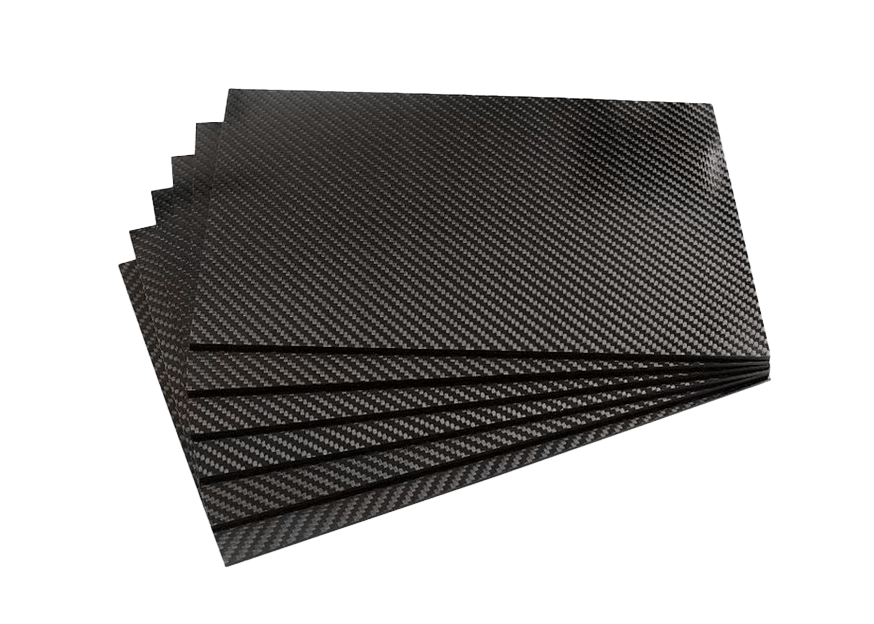
Structural components made of carbon fiber-reinforced composites (CFRP) that require X-rays to pass through them.
Extremely high X-ray transmittance: The X-ray transmittance of carbon fiber panels typically reaches over 96 percent, and for certain products or specific structures, it can even reach 98 to 99 percent.
Extremely low “aluminum equivalent”: This is a key indicator of the degree to which a material attenuates X-rays. A 1-mm-thick carbon fiber panel has an “aluminum equivalent” of only about 0.1 mmAl, meaning its attenuation of X-rays is equivalent to that of an extremely thin aluminum sheet.
Significant potential for dose reduction: Because they absorb very little radiation, carbon fiber panels can effectively reduce radiation exposure for patients and medical staff. Early studies show that, compared to aluminum components, carbon fiber panels can reduce patient exposure by approximately 25%; Some patented technologies claim that, with specific designs, X-ray exposure requirements can be reduced by an average of 30%, and in some cases, by as much as 55%.
Lightweight and High-Strength: Carbon fiber composites have a density of approximately 1.5–1.6 g/cm³, which is lower than aluminum’s 2.7 g/cm³, but their tensile strength is far higher than that of aluminum. This allows equipment to be made lighter and thinner while maintaining structural integrity.
Patient support and positioning plates: Examples include CT/DR examination table plates, breast support frames for mammography, and fluoroscopy stands used in orthopedic surgery. These components must bear weight while ensuring they do not interfere with imaging.
X-ray cassette panels: As the outer casing protecting the internal film or detector, carbon fiber front panels allow more X-rays to reach the detector, thereby reducing the required dose.
Structural Components for Flat Panel Detectors (FPDs): Serving as the detector’s housing or support plate, these components typically range in thickness from 0.5 mm to 3 mm, ensuring efficient X-ray transmission while protecting precision components.
Covering Material for X-ray Grids: Replacing aluminum housings to reduce additional X-ray absorption.