


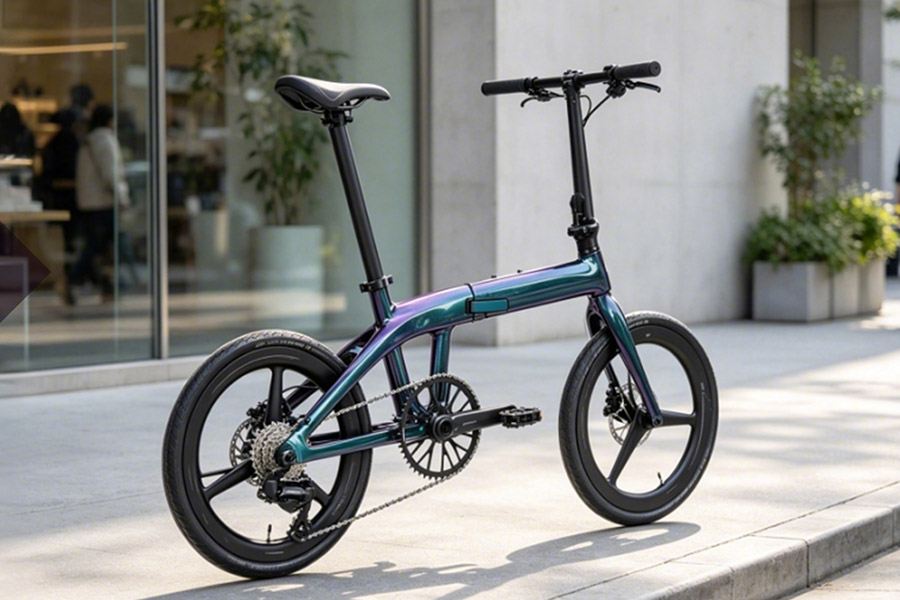
When a bicycle frame weighs just 560 grams—less than a bottle of mineral water—yet can withstand the impact of an adult rider pedaling at full force, carbon fiber is redefining how people view bicycles. From “high-end equipment” that once cost tens of thousands of yuan to carbon-fiber road bikes now available for as little as 8,000 yuan, a consumer upgrade in cycling—driven by a materials revolution—is rapidly gaining momentum.
Technological self-reliance is paving the way for “lightweight” cycling. The core of a carbon fiber frame lies in maximizing the potential of each carbon fiber strand—each just one-tenth the diameter of a human hair. A bundle of carbon fibers contains 12,000 strands, which must be precisely layered at different angles—much like stacking a “thousand-layer cake”—to create a frame capable of withstanding the forces encountered during cycling. In the past, this technology was virtually monopolized by foreign companies, but since the beginning of this century, domestic enterprises have been independently tackling the challenge and have gradually mastered the entire process—from carbonizing the raw filaments to producing prepregs.
Falling costs are making “lightweight” truly accessible to the masses. The flip side of these technological breakthroughs is a reshaping of prices. T300-grade carbon fiber, which once cost around 200,000 yuan per metric ton, has now dropped to approximately 60,000 yuan—a 70% reduction. Measures such as large-scale production, intelligent operations, and thermal energy recovery have successfully reduced electricity consumption during the carbonization process by about 25%, driving the shift in carbon fiber sales from “per kilogram” to “per metric ton.” At the consumer end, the price barrier for entry-level carbon fiber models continues to drop; carbon fiber road bikes are now available for as low as 8,000 yuan, and carbon fiber bicycles—which once “started at over 100,000 yuan”—are rapidly making their way onto the shopping lists of ordinary consumers. At the same time, the structure of end-consumer spending is undergoing profound changes: the average price of bicycles has risen by 20 percent, and consumers’ purchasing motives have shifted entirely from commuting to sports and recreation, with sales of mid- to high-end sports bicycles increasing by over 40 percent year-over-year.
Industry synergy has provided a new engine for the cycling economy. The rise of carbon-fiber bicycles is not an isolated phenomenon. According to data from the General Administration of Sport of China, the total length of dedicated urban bike lanes nationwide has exceeded 100,000 kilometers, and the total number of cycling enthusiasts has surpassed 200 million. By 2026, the market size of China’s cycling equipment industry is projected to reach 32.29 billion yuan, while the overall cycling market is expected to exceed 60 billion yuan. In this rapidly expanding market, carbon fiber bicycles serve as a “value anchor”—they are not only the core vehicle for the upgrade of cycling consumption but also a key breakthrough for domestic brands to compete globally.
From the streams of black and gray carbon fiber roving pouring out of the production lines to the silhouettes of cyclists gliding effortlessly along urban greenways, carbon fiber bicycles are making a value leap from a “material breakthrough” to a “consumer engine.” As lighter frames, lower prices, and a burgeoning cycling culture converge, this “lightweight” race track will unlock even greater potential.